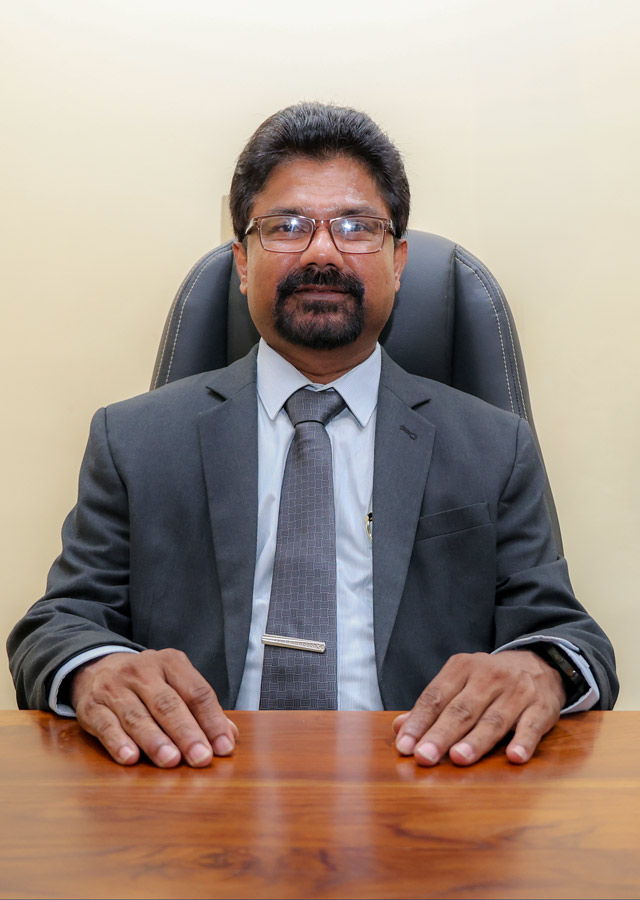
Prof. Ashoka Kumara
Director
Office of the Director / Material Processing and Device Fabricationkumara.as@nifs.ac.lk
Search news, scientists, events, research, reports, facilities, and pages.
Utilization of locally available materials for energy conversion, storage and other electronic devices.
Research Focus
The Material Processing and Device Fabrication (MPDF) research programme focuses on fundamental and applied studies in advanced materials, energy conversion, energy storage, and electronic device fabrication using locally available resources. The programme places particular emphasis on Sri Lankan vein graphite, graphite-derived materials, activated carbon, and low-cost functional materials for sustainable technological applications.
A major component of the research involves the processing, exfoliation, purification, and functional modification of graphite to produce graphene sheets, expanded graphite, and conductive thin films for use in electronic and energy-related devices. The programme also investigates the fabrication and optimization of advanced supercapacitors, dye-sensitized solar cells, perovskite solar cells, and related electronic devices using environmentally friendly and cost-effective approaches.
Special attention is given to the conversion of agricultural and industrial waste materials, particularly coconut shells and other biomass resources, into highly porous and electrically conductive activated carbon materials. These materials are explored for applications in supercapacitor electrodes, counter electrodes for solar cells, water purification systems, air filtration technologies, and oil spill remediation. The long-term objective is to contribute to the development of sustainable energy storage systems and fast-charging technologies for emerging electric vehicle applications.
The programme actively collaborates with several national and international institutions, including the Uva Wellassa University, University of Jaffna, and University of Peradeniya, to strengthen interdisciplinary research in solar energy conversion, advanced carbon materials, and next-generation electronic devices.
Why Does This Research Matter
This research addresses several nationally important challenges related to sustainable energy, environmental protection, and value addition to Sri Lanka’s natural resources. As global demand for clean energy and advanced electronic technologies continues to grow, there is an urgent need to develop low-cost, environmentally friendly, and locally sustainable solutions for energy conversion and storage.
Sri Lanka possesses valuable natural resources such as high-purity vein graphite and abundant biomass materials including coconut shells. However, the industrial value addition to these resources remains limited. The research programme aims to transform these locally available materials into high-value advanced products such as graphene, activated carbon, supercapacitors, solar cell components, and other functional electronic materials. This approach has the potential to support the development of new local industries and reduce dependence on imported technologies.
The programme also contributes to environmental sustainability through research on renewable energy devices, waste-to-value material conversion, water and air purification technologies, and oil spill remediation materials. Furthermore, the development of efficient energy storage systems and low-cost solar technologies can support future energy security and emerging electric vehicle infrastructure in Sri Lanka.
Overall, this research combines fundamental scientific investigation with practical technological applications that can contribute to national economic development, environmental sustainability, and scientific innovation.
These profiles are linked directly from the staff section.
Director
Office of the Director / Material Processing and Device Fabricationkumara.as@nifs.ac.lk
Adjunct Professor
Material Processing and Device Fabricationktenna@yahoo.co.uk
Research Assistant
Material Processing and Device Fabricationdileep.ga@nifs.ac.lk
Research Assistant
Material Processing and Device Fabricationlahiru.ka@nifs.ac.lk
Research Assistant
Material Processing and Device Fabrication